
Key Points on How Music NFTs Are Transforming the Music Industry
- Greater Artist Control — Music NFTs enable artists to retain ownership of their work and use smart contracts for automatic royalty payments, reducing reliance on traditional labels.
- New Revenue Opportunities — Artists can sell limited-edition tracks, exclusive content, and even shares of future royalties, creating diverse income streams beyond streaming.
- Stronger Fan Connections — NFTs offer fans exclusive access, voting rights, and behind-the-scenes content, fostering direct relationships without intermediaries.
- Transparent and Fair Royalties — Blockchain technology provides immutable tracking of usage and instant, accurate payouts, addressing long-standing issues in royalty distribution.
- Collectible and Investment Potential — Music NFTs function as digital collectibles that can be traded, with emerging trends like fractional ownership pointing to long-term value.
Why 2026 Matters 2026 marks a pivotal year for music NFTs, with market projections showing strong growth (e.g., the sector could reach billions in value by the end of the decade) and platforms becoming more sustainable and user-friendly. Adoption is accelerating among independent artists and major names alike, supported by blockchain-powered music platforms.
Supporting Platforms like IndieChain for independent artists and broader blockchain-powered music platforms for seamless NFT integration.
The music industry has long been dominated by intermediaries—record labels, streaming services, and distributors—that often leave artists with a small share of earnings while fans have limited ways to directly support creators. Music NFTs are changing this dynamic by leveraging blockchain technology to give artists unprecedented control, new monetization options, and deeper fan engagement. As a unique form of digital ownership, music NFTs represent songs, albums, stems, artwork, concert tickets, or even royalty shares as non-fungible tokens—verifiable, scarce digital assets on the blockchain.
In 2026, the sector is experiencing renewed momentum. After the volatility of earlier years, advancements in eco-friendly blockchains (such as Ethereum’s proof-of-stake transition and alternatives like Polygon or Tezos) have reduced environmental concerns, while market forecasts indicate robust expansion. For instance, some analyses project the music NFT market to grow at a compound annual growth rate (CAGR) of over 30% through the next decade, with valuations potentially reaching billions as more artists and fans participate. This growth is fueled by blockchain-powered music platforms that make minting, selling, and managing NFTs accessible even to independent creators.
This article explores the top five ways music NFTs are reshaping the industry, supported by real-world examples, statistics, and platform insights. It also addresses challenges and offers a forward-looking perspective.
What Are Music NFTs?
Non-fungible tokens, or NFTs, are unique digital assets that represent ownership of a specific item or piece of content, securely stored on a blockchain—a decentralized digital ledger that guarantees transparency, authenticity, and immutability. Unlike cryptocurrencies such as Bitcoin or Ethereum, which are interchangeable and identical, NFTs are one-of-a-kind, making them perfect for representing digital art, collectibles, and most importantly, music.
In the music world, Music NFTs are transforming the way artists create, distribute, and monetize their work. These tokens can take several forms, each offering distinct value to both creators and fans:
- Audio Files – This includes full songs, albums, remixes, or even stems (individual track elements) that fans or producers can use for remixes or sampling. Selling unique stems or alternate versions as NFTs provides artists with new revenue opportunities.
- Visual and Multimedia Bundles – Music NFTs are not just sound—they often come packaged with visual assets such as album artwork, music videos, or immersive digital experiences. Virtual concert access, augmented reality performances, or interactive music videos can be bundled with the NFT, offering fans an enriched multimedia experience.
- Utility-Based NFTs – Beyond ownership of music itself, NFTs can act as digital passes. Fans might gain access to exclusive events, VIP meet-and-greets, merchandise drops, or special fan clubs. These utility NFTs strengthen artist-fan relationships by making fans active participants in the artist’s journey.
- Royalty-Sharing Tokens – Some Music NFTs represent fractional ownership of streaming or licensing revenue. This allows fans and investors to benefit financially alongside the artist, turning music into both a collectible and an investment opportunity.
The benefits for artists are substantial:
- True Ownership – Unlike traditional platforms where third-party labels or streaming services control distribution, Music NFTs give artists full control over their work. No one can arbitrarily remove or modify an NFT once it’s minted on the blockchain.
- Programmable Royalties – Smart contracts, which are self-executing programs on the blockchain, automate royalty payments. Artists can define rules so that whenever an NFT is sold, resold, or used commercially, royalties are automatically sent to their wallet, ensuring timely and fair compensation.
- Enhanced Fan Engagement – Fans who own NFTs become stakeholders in the artist’s success. They have verifiable ownership of a piece of the artist’s catalog, which creates stronger loyalty, community involvement, and excitement around releases.
The adoption of Music NFTs is accelerating rapidly. Market reports suggest that the global music NFT market reached multi-billion-dollar valuations in 2025 and is projected to grow at a CAGR of 28–32% over the next few years. This growth is driven by mainstream artists exploring NFTs as part of their release strategy, the rise of blockchain infrastructure, and increased fan interest in owning verifiable, scarce digital music assets.
Platforms like IndieChain are making this ecosystem accessible to independent artists. IndieChain offers blockchain-based certification of work, automated royalty splits, and verification tools, empowering creators to monetize their music fairly without relying on traditional intermediaries. Additionally, blockchain-powered music platforms enable artists to connect directly with fans, sell limited editions, and explore innovative fan engagement strategies that were previously impossible.
In essence, Music NFTs are redefining the music industry, shifting power back to artists, creating new revenue models, and building stronger communities around music in a transparent, secure, and decentralized way. As adoption continues to grow, these digital tokens are not just collectibles—they are becoming an essential tool for the modern music economy.
Also Read – Why IndieChain™ Focuses on Documentation, Not Disruption
Way 1: Artists Can Retain More Control Over Their Work

In the traditional music industry, artists often sign away large portions of their rights to record labels in exchange for advances, promotion, and distribution. This arrangement frequently leaves them with limited creative and financial control. Royalties trickle in slowly, are diluted across multiple intermediaries, and often lack transparency. Music NFTs completely flip this model by returning ownership and agency to the artists themselves.
At the heart of this transformation are smart contracts—self-executing agreements stored on the blockchain. Artists can define the rules for how royalties are distributed, automating payments to their wallets without relying on labels or distributors. For instance, an artist can program a 10% royalty on every secondary sale of their NFT, ensuring continuous income whenever the NFT changes hands. This not only guarantees fair compensation but also protects against unauthorized use of their work.
Real-world examples illustrate the potential. Platforms like Royal.io allow artists to sell master recording rights or fractional royalty shares directly to fans. Hip-hop legend Nas released NFTs tied to individual tracks, giving holders a percentage of streaming revenue. Electronic artist 3LAU raised over $11 million by selling NFTs that included royalty rights for his album, demonstrating that music NFTs can rival—or even surpass—traditional label deals.
Blockchain-powered music platforms further empower independent artists. For example, IndieChain uses blockchain to verify achievements, automate royalty splits, and create transparent records, giving lesser-known musicians the same tools previously reserved for major label stars. By embracing this technology, artists regain control over their intellectual property, pricing, and distribution, leveling the playing field in an industry historically dominated by large corporations.
Way 2: New Revenue Streams for Musicians

Music NFTs unlock diverse monetization opportunities that go far beyond the limited earnings from streaming platforms, where artists often earn fractions of a cent per play. With NFTs, musicians can create multiple revenue streams that engage fans and generate significant income. Examples include:
- Limited-edition tracks or albums: Releasing exclusive songs or remixes as NFTs adds scarcity and value.
- Demo versions or behind-the-scenes content: Fans pay for access to previously unreleased material.
- Virtual concert tickets and VIP experiences: NFTs can act as digital passes for immersive online or live events.
- Fan-funded projects: Supporters can buy NFTs to fund new releases, effectively crowdfunded by their most loyal fans.
Case studies highlight the impact of this shift. Snoop Dogg’s NFT collections, such as “A Journey with the Dogg,” combined music and digital collectibles to generate millions in revenue. 3LAU’s “Ultraviolet” NFT album raised over $11 million, showing how music NFTs can supplement—or even replace—traditional deals.
Industry reports reinforce this trend. Music NFT sales have generated hundreds of millions of dollars in recent years, and Blockchain-Powered Music Platforms like Royal.io and IndieChain report that limited NFT drops consistently attract high engagement from fans eager to support artists directly.
Way 3: Direct Fan-to-Artist Interaction
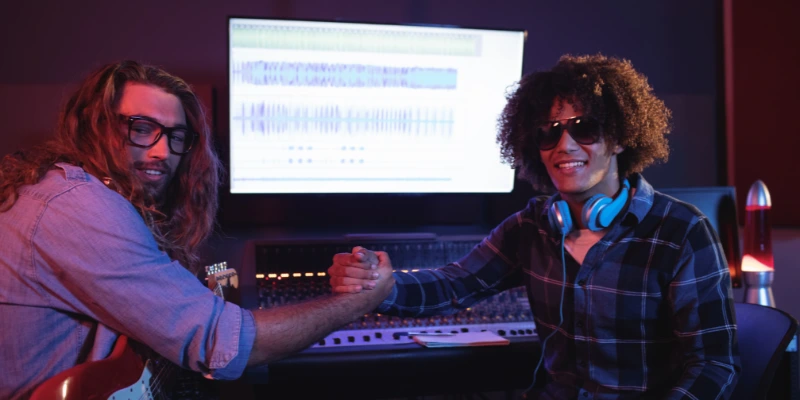
Music NFTs are transforming passive listeners into active members of artist communities. NFT holders often gain perks that go beyond traditional music consumption, creating deeper engagement and loyalty. Some examples include:
- Exclusive access: Early releases, private livestreams, or special editions available only to NFT holders.
- Voting rights: Fans can influence album artwork, setlists, or collaborations.
- Behind-the-scenes content: Studio sessions, personal messages, or developmental updates from artists.
This approach bypasses labels and streaming platforms entirely, giving fans a sense of ownership and direct involvement. Fans not only feel more connected but can also benefit financially if their NFTs appreciate in value.
Platforms like Audius and Sound.xyz are building these fan-focused ecosystems, while IndieChain enables independent creators to produce verifiable, fan-facing digital assets. By creating interactive experiences, Music NFTs foster stronger communities and a more sustainable relationship between artists and their audiences.
Way 4: Transparency and Fair Royalties
One of the most longstanding challenges in the music industry is the lack of transparency in royalty payments. Traditional systems often leave artists waiting months to receive payments, with limited visibility into how their work is being used. Blockchain technology addresses this by providing an immutable, verifiable record of every stream, download, and sale.
Smart contracts automate royalty distribution. Whenever an NFT is played, resold, or otherwise monetized, funds are automatically directed to the artist based on pre-programmed rules. This reduces disputes and ensures fair, timely compensation. Platforms such as Royal.io and Catalog incorporate these features to make royalties transparent, traceable, and equitable.
Beyond financial benefits, this transparency builds trust. Artists can definitively prove ownership of their work, while fans gain confidence knowing their support directly contributes to creators’ earnings. This level of clarity was almost impossible in the pre-blockchain era, making Music NFTs a game-changer for fairness and accountability.
Way 5: Revolutionizing Music Collectibles and Investment
Music NFTs are turning songs into tradable digital collectibles, akin to rare vinyl records or signed memorabilia. Fans can buy, hold, or resell NFTs on marketplaces like OpenSea, creating a new investment layer for music.
Emerging trends include:
- Fractional ownership: Multiple fans can co-own high-value NFTs, opening access to larger assets.
- Cross-platform interoperability: NFTs can move between different marketplaces and ecosystems, enhancing liquidity and visibility.
- Integration with metaverses: Virtual concerts and immersive experiences where NFTs serve as tickets or exclusive access passes.
Early examples show significant financial upside. Some rare music NFTs have appreciated substantially in value, giving fans both emotional and monetary incentives to engage. As adoption grows, Music NFTs could fundamentally change the way music is consumed, collected, and valued.
Challenges and Considerations
Despite the transformative potential of Music NFTs, several challenges remain:
- Market volatility: NFT values fluctuate, and early adopters face financial risk.
- Environmental impact: Early Ethereum-based NFTs faced criticism for high energy consumption, though 2026 sees widespread adoption of proof-of-stake and carbon-neutral blockchain solutions.
- Education and security: Artists and fans need guidance on wallets, scams, and authenticity verification.
These issues are gradually being addressed through improved technology, education, and the development of eco-friendly blockchain platforms.
Platform Comparison Table
| Platform | Key Features | Best For |
| IndieChain | Royalty splits, certification, transparency | Independent artists |
| Royal.io | Royalty-sharing NFTs | Established artists selling shares |
| OpenSea | Broad marketplace, music collections | Trading and discovery |
| Audius | Streaming + NFTs | Fan engagement |
| Catalog | One-of-one music NFTs | Exclusive releases |
Conclusion
Music NFTs are not just a passing trend—they are fundamentally reshaping the music industry. By giving artists greater control over their work, creating new revenue streams, enabling direct fan-to-artist connections, ensuring transparent royalties, and turning music into valuable digital collectibles, NFTs are empowering creators like never before. In 2026, these innovations are more accessible, sustainable, and profitable than ever, leveling the playing field between independent artists and major labels.
For musicians looking to harness this transformation, blockchain-powered music platforms offer the tools needed to certify, monetize, and protect their creations. Platforms like IndieChain allow independent creators to verify achievements, automate royalty splits, and engage fans with exclusive content. Meanwhile, other blockchain-based platforms provide opportunities for artists to expand their reach, connect directly with listeners, and explore new business models in the digital music ecosystem.Whether you’re an artist, collector, or fan, embracing Music NFTs today means participating in the future of music ownership, where creativity, transparency, and fair compensation go hand in hand. The revolution is here—don’t get left behind.