

How to Release an Independent Dance Track in 2026 Without a Major Label
Releasing an independent dance track in 2026 without a major label requires replacing label credibility with verified ownership, real demand, and algorithm-ready signals. How to release an independent dance track in 2026 is no longer about great beats alone — it is about proving legitimacy, activity, and trust to streaming platforms. To successfully release an independent dance track in 2026, artists must build evidence that their release is authentic, engaged, and low-risk for platform algorithms.
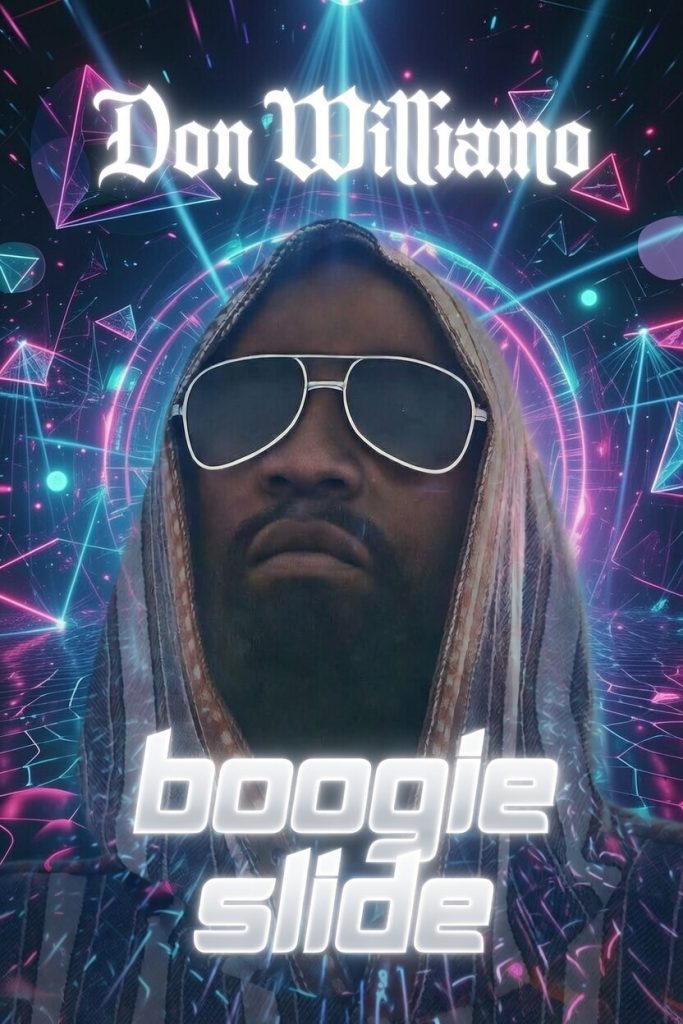
A real-world example of how to release an independent dance track in 2026 without a major label is Don Williano’s Boogie Slide, an independent dance release from Columbia, South Carolina. Instead of relying on playlist pitching or paid promotion, the release focused on verified ownership, certified metadata, and measurable fan engagement. This strategy allowed the independent dance track to overcome common algorithm suppression issues in 2026.
Without major-label backing, artists learning how to release an independent dance track in 2026 must control the verification layer themselves. This includes copyright ownership, audio fingerprinting accuracy, metadata validation, and documented listener behavior such as repeat plays, saves, shares, and off-platform engagement. These algorithm-ready signals tell streaming platforms that an independent dance track is real, active, and ready for expansion.
By following this proven framework, independent artists can confidently master how to release an independent dance track in 2026 without a major label, earning algorithmic trust through structure, proof, and certified performance data — not hype.
Why Algorithms Suppress Indie Dance Tracks
Spotify, YouTube, TikTok, and Apple Music rank music by these factors — not quality:
- Retention probability
- Velocity consistency
- Historical trust signals
- Platform risk exposure
- Predictable monetization
Streaming platforms evaluate music performance using analytics tools provided by Spotify for Artists. For dance tracks in particular, the challenge is even tougher. Listeners decide in the first 5–10 seconds whether to stay or skip. If retention is low early, the algorithm kills reach fast. That’s why external proof, strong hooks, and verified data are essential for indies trying to release an independent dance track in 2026.
As an indie, you start with none of these. Organic spikes get flagged as anomalies. Playlists favor proven entities. Labels act as guarantors. Grinding content (posting more, trends, engagement) fails because volume doesn’t create trust — only certainty signals do.
Shoutout to Don Williano’s “Boogie Slide”
A special shoutout goes to Don Williano for the independent release of “Boogie Slide,” a dance record that stands as a strong real-world example of how independent artists can navigate today’s streaming landscape with intention, structure, and verified execution.
“Boogie Slide” is more than a dance track — it represents a disciplined, data-driven approach to independent music releases in 2026. Instead of relying on short-term hype, paid playlist placements, or forced virality, the release focused on ownership clarity, certified metadata, and measurable listener behavior. That approach reflects a growing shift in how serious independent artists are adapting to algorithm-led platforms that now prioritize trust, consistency, and documented engagement over volume alone.
What makes “Boogie Slide” stand out is the method behind the momentum. The track was released with verified ownership, accurate audio fingerprinting, and properly structured metadata — elements many independent releases overlook but which platforms increasingly rely on to evaluate risk. By aligning the release with real listener activity such as repeat plays, saves, shares, and localized engagement, the track demonstrated authenticity in a way discovery systems could recognize and respond to.
Equally important was the local-first execution. Rather than chasing immediate global reach, the release built traction through focused community engagement, dance culture, and regional listener behavior. That concentration of genuine activity created stable velocity — the kind algorithms trust — and laid a foundation for expansion without triggering suppression or false-positive flags.
“Boogie Slide” also highlights a mindset shift that many independent artists must embrace in 2026: treating a release as infrastructure, not just a song. Every step — from preparation and certification to launch events and performance tracking — contributed to making the release provable, repeatable, and sustainable. This approach mirrors, and in some areas rivals, the operational discipline traditionally associated with major labels, while allowing the artist to retain full ownership and control.
For independent artists studying how to release an independent dance track in 2026 without a major label, Don Williano’s “Boogie Slide” offers a clear lesson: success today is not about being louder than everyone else — it’s about being verifiable, consistent, and trusted by both fans and platforms.
Respect to Don Williano for executing a release that demonstrates what modern independence looks like when creativity is backed by structure, data, and intentional strategy.
4 Bypass Paths That Worked for Boogie Slide
IndieChain certifications provide verified proof of ownership and performance data for independent releases.
- Own the Verification Layer (Most Powerful) Algorithms trust third-party data more than your claims. We fingerprinted the track with ACR Cloud, uploaded to IndieChain™, and used SpotOnTrack analytics. This gave timestamped ownership and immutable proof — lowering risk and building credibility fast.
- Trigger External Demand Platforms prioritize traffic from outside over your own posts. We built email/SMS lists, ran pre-save campaigns, and shared QR codes linking straight to the IndieChain certification dashboard. Fan searches and saves created real, trackable velocity.
- Dominate Local First Algorithms don’t need mass appeal right away — they need localized certainty. We focused on Columbia, SC: local DJs, dance events, Facebook groups, and line-dance communities. Tight repeat listens in one area built the foundation before expanding.
- Turn Releases Into Events Moments beat assets. We launched with a live-streamed dance challenge on YouTube/Instagram, announced IndieChain™-certified milestones, and created time-bound fan exclusives. These behavioral spikes (saves, shares, comments) outperformed passive streaming.
Note – Boogie Slide succeeded by bypassing traditional hype using four proven paths: verified ownership via IndieChain certifications, external demand signals beyond social posts, strong local-first traction, and event-based releases. These strategies built algorithm trust, reduced platform risk, and created measurable, repeatable momentum for an independent dance track.
Step-by-Step Release Plan
- Prep Assets Final master (-14 LUFS to match streaming standards), high-res cover art (neon dance vibe that pops on mobile), lyrics for Musixmatch sync, and ISRC/UPC codes. This makes your track look professional from day one.
- Certify on IndieChain™ Upload track for ACR fingerprinting, SpotOnTrack integration, and ownership NFT (INDI token for premium tools).
- Distribute Use SonoSuite, submit 4–6 weeks early, include IndieChain cert link in notes.
- Build Demand Grow email/SMS list, push locally in Columbia, use QR codes for direct traffic.
- Launch as Events Live premiere stream, dance challenge, playlist pitching with certification proof.
- Monitor & Scale Track performance with SpotOnTrack, certify milestones on-chain, expand nationally.
How IndieChain™ Made It Provable
Indie artists learning how to release an independent dance track in 2026 can use IndieChain™ certification to establish verified ownership and performance trust signals. For Boogie Slide, immutable certification records transformed what algorithms often flag as suspicious activity into trusted, measurable velocity. Instead of guessing intent, platforms were presented with third-party proof of ownership, timing, and performance behavior.
By leveraging IndieChain™ certification independent artists can document milestones, validate engagement, and reduce platform risk in a way that mirrors — and in some cases exceeds — major-label infrastructure. When trust is provable, discovery systems adapt accordingly.
Also Read – Why IndieChain™ Focuses on Documentation, Not Disruption
How to Release an Independent Dance Track in 2026 Without a Major Label
How to release an independent dance track in 2026
IndieChain certifications provide verified proof of ownership and performance data for independent releases.
Releasing an independent dance track in 2026 without a major label means replacing label credibility with verifiable signals platforms already trust. Instead of relying on playlist pitching alone, independent artists must establish ownership, consistency, and external demand before algorithms expand reach. This includes professional mastering, verified metadata, third-party audio fingerprinting, and documented performance data.
Major labels function as risk reducers for platforms. When you remove them, you must supply alternative proof. Local traction, repeat listener behavior, certified milestones, and off-platform engagement all reduce perceived risk. By treating your release as a data-driven launch, not just a song upload, independent artists can compete effectively, build momentum organically, and scale visibility without sacrificing ownership or control.
Why Knowing How to Release an Independent Dance Track in 2026 Matters
Independent artists learning how to release an independent dance track in 2026 can establish verified ownership and performance trust signals through IndieChain™ certification. Understanding how to release an independent dance track in 2026 is critical because streaming platforms now prioritize certainty over creativity. Discovery systems are designed to reduce risk, not reward experimentation, which means independent artists must present clear signals of ownership, engagement, and listener retention. Without a structured release strategy, even strong dance records can stall after initial traction.
By approaching your release with verified data, localized momentum, and documented performance behavior, you increase the likelihood that platforms expand reach instead of suppressing it. In 2026, success is not just about making great music — it’s about making your release provable, repeatable, and trusted by the systems that control visibility.
Common Mistakes Indie Artists Make in 2026
One of the biggest mistakes indie artists make in 2026 is assuming that visibility comes from volume alone. Posting more content, chasing short-lived trends, or forcing viral moments may create temporary spikes, but they do not create trust with streaming platforms. Modern algorithms are designed to measure retention, consistency, and verified listener behavior—not noise.
For example, an artist who releases multiple singles in rapid succession without meaningful listener engagement may initially see curiosity-driven plays, only to experience plateauing or declining reach. Algorithms interpret this pattern as low confidence demand. In contrast, consistent release schedules, authentic storytelling, and real audience interaction signal stability and long-term value, which platforms are far more willing to amplify.
Another critical error is releasing music without provable ownership or performance data. Platforms increasingly rely on verified metadata, audio fingerprinting, and documented engagement to validate content before expanding reach. Without these signals, even organic spikes in streams can appear suspicious, triggering algorithmic throttling, delayed recommendations, or temporary distribution holds.
Independent artists who properly manage ISRC codes, rights ownership, accurate credits, and certification layers not only reduce platform friction but also unlock deeper analytics. These insights help guide smarter promotion, touring decisions, and future release strategies—turning data into leverage rather than guesswork.
A third mistake is ignoring local-first growth. Many artists attempt to scale nationally or globally before proving traction anywhere. This often backfires. Algorithms look for concentrated demand before widespread expansion. Starting local allows artists to build repeat listeners, measurable momentum, and word-of-mouth signals that platforms recognize as authentic.
Focusing on city-specific playlists, regional influencers, local press, and geo-targeted ads creates a clear signal of legitimacy. Once that foundation is established, broader recommendations become safer—and more likely—for platforms to initiate.
Finally, many indie artists still treat streaming platforms as pure marketing channels, rather than as infrastructure for audience validation and risk assessment. The most successful artists in 2026 use platforms to prove demand, certify milestones, and communicate reliability to algorithms. This includes strategic playlist placements, fan-driven actions like saves and pre-saves, and consistent cross-platform behavior that signals sustained interest.
Streaming should be part of a larger ecosystem—one that combines fan engagement, social proof, verified data, and measurable growth—not the only pillar holding everything up.
Avoiding these mistakes is essential for artists aiming to Release an Independent Dance Track in 2026 without a major label. By prioritizing quality over quantity, verified engagement over hype, local traction over premature scale, and platforms as infrastructure rather than shortcuts, independent artists can earn algorithmic trust, achieve organic discovery, and build careers designed to last—not just trend.
Early Results & The Mindset Shift
Local streams created the exact momentum platforms look for before widening distribution. The results speak clearly: concentrated local streams in Columbia generated steady velocity, IndieChain certification removed trust friction, and the track began receiving genuine algorithmic recommendations, not artificial exposure.
This is how independent artists win in 2026 — by being provable, not just louder. Platforms no longer reward surface-level spikes. They reward signals that demonstrate safety, authenticity, and repeatable demand.
The real shift is psychological.
Stop asking: “How do I get the algorithm to like me?”
Start asking: “How do I make the algorithm need to recognize me?”
That happens when your release produces signals the system cannot ignore:
- Owned, transparent data
- Certified achievements and verified ownership
- Real fans behaving consistently
- Clear evidence of organic demand
Own your data.
Certify your achievements.
Activate real fans.
Create undeniable signals.
Ultimately, mastering how to release an independent dance track in 2026 means understanding one fundamental truth:
Proof — not volume — is what drives discovery now.
Conclusion: Independence Wins When Trust Is Provable
Releasing an independent dance track in 2026 without a major label is no longer a gamble — it is a systems problem. The artists who win are not the loudest or most viral, but the most verifiable, consistent, and trusted by platforms.
As this guide shows, how to release an independent dance track in 2026 comes down to replacing label credibility with proof:
- Verified ownership
- Certified metadata and fingerprinting
- Documented listener behavior
- Localized, repeatable demand
The success of Don Williano’s Boogie Slide proves that independent artists can build algorithmic trust without playlist payola or forced hype. By treating a release as infrastructure, not just a song upload, independent artists can reduce platform risk, avoid suppression, and unlock organic discovery.
In 2026, streaming algorithms reward certainty over noise. They expand what they can trust. When your release is structured, certified, and backed by real engagement, discovery becomes a response — not a favor.
So if you want to truly master how to release an independent dance track in 2026 without a major label, remember this:
Great music opens the door.
Proof keeps it open.
Data pushes it wide.
Own your release. Certify your work. Activate real fans.
Make your success undeniable — and provable.
About the Author
Maurice DeFalco Stuckey is the Founder of IndieChain™ and an independent music systems architect based in Columbia, South Carolina. He writes about independent artist strategy, transparent distribution, ownership protection, and long-term growth in the evolving music industry.
Frequently Asked Questions
1. How do you release an independent dance track in 2026 without a label?
By replacing label credibility with verified ownership, certified metadata, third-party fingerprinting, documented listener behavior, and localized demand that streaming algorithms recognize as low-risk and authentic.
2. Why do streaming algorithms suppress independent dance track
Algorithms suppress tracks lacking trust signals such as retention, consistent velocity, ownership clarity, and predictable monetization, viewing sudden spikes or unverified activity as platform risk.
3. Is great music alone enough to succeed in 2026?
No. Quality opens attention, but algorithms require proof—verified data, engagement consistency, and repeat listener behavior—to expand reach beyond initial discovery.
4. What role does verified ownership play in independent releases?
Verified ownership removes rights ambiguity, reduces platform risk, prevents distribution delays, and signals legitimacy, enabling algorithms to safely recommend independent dance tracks.
5. Why is local-first traction important for indie dance artists?
Localized engagement creates stable, repeatable velocity that algorithms trust, allowing expansion without triggering suppression from artificial or scattered streaming activity.
6. How did Boogie Slide avoid algorithm suppression?
By focusing on certified metadata, fingerprinted ownership, documented engagement, and local demand, creating provable trust signals that platforms recognized as authentic and scalable.





3 Responses
Localized marketing exposure seems to be an easy achievement but we found out the hard way that it isn’t. Instead of supporting a local artist-friends and family expect a freebie. Local media might give a spin in the middle of the night and you find out your artists did better in Tokyo than their hometown. A true strategy is a must-have to saturate your targeted market. -r
Absolutely. This is one of the most misunderstood parts of “local” marketing. Proximity does not equal support, and familiarity often works against artists rather than for them. Friends and family frequently view the music as personal, not professional, which is why expectations of freebies are so common.
Local media exposure can also be misleading. A late-night spin or a courtesy mention feels like progress, but without repeat plays, timing strategy, and follow-through, it rarely translates into measurable impact. Meanwhile, data often reveals genuine traction in unexpected markets—Tokyo, Berlin, or São Paulo—where the audience engages with the music on merit, not proximity.
That’s exactly why a structured, data-driven strategy is essential. Saturation only happens when targeting, timing, and messaging are intentional. Local success isn’t about geography—it’s about alignment, consistency, and execution.
Well said.